I tried staking once. Lost money. Not because the system failed.
But because nobody told me what actually mattered.
You want passive income from crypto. Not gambling. Not day trading.
Just your coins working while you sleep.
But most guides? They drown you in jargon. Or worse (they) pretend staking is risk-free.
It’s not. And if you don’t understand Crypto Staking Networks Gscryptopia, you’re guessing.
This article cuts through that. No fluff. No hype.
Just how staking really works (step) by step.
You’ll learn what makes one network safer than another. Why some pay more but cost you more in fees or downtime. How to check if your coins are even stakable (they’re not always).
And yes (I’ll) tell you where most people mess up before they even begin.
You don’t need a finance degree. You need clarity. That’s what this is.
By the end, you’ll know exactly how to start earning. Not just hope you do.
What Staking Really Is
Crypto staking is locking up your coins to keep a blockchain running.
You hold them in a wallet or on a platform, and the network uses them to verify transactions.
It’s not magic. It’s how Proof-of-Stake (PoS) works. PoS replaces energy-hungry mining (Proof-of-Work) with simple participation.
You’re not solving puzzles. You’re putting skin in the game.
Think of it like a savings account. You deposit dollars, you earn interest. Here, you lock crypto, you earn more crypto.
Staking rewards you for helping secure the network. You also get voting rights (say,) on software upgrades or protocol changes. That’s governance.
Not just hype. Real say.
Passive income? Yes. That’s why people do it.
But don’t assume it’s free money. You can lose value if the price drops. Or get slashed for misbehaving.
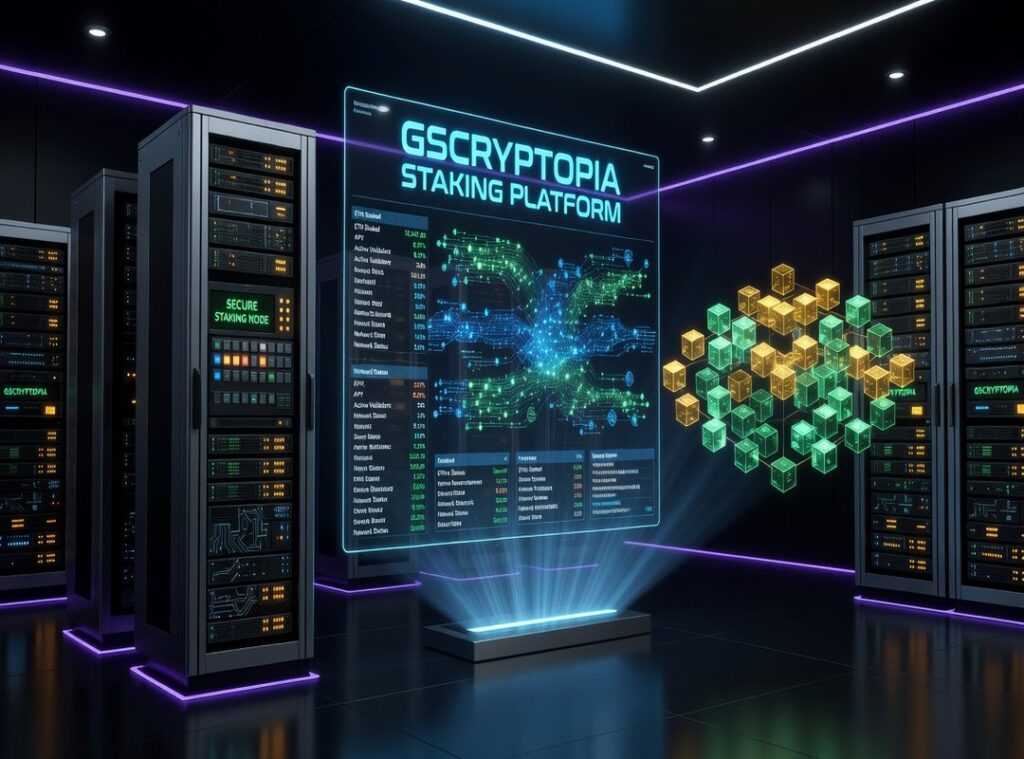
I started staking on Gscryptopia because it supports multiple chains without juggling five apps.
(Crypto Staking Networks Gscryptopia is one place that actually works across Ethereum, Solana, and Cardano.)
Crypto staking networks are gaining popularity, and one of the most promising platforms is Gscryptopia, which offers unique features for investors.
You pick a coin. You lock it. You wait.
You collect. No coding. No servers.
Just your keys and patience.
What’s the first coin you’d stake?
Or are you still stuck on “but what if it crashes?”
Most people are.
I was too.
How Validators Actually Keep Staking Running
I run staking nodes. Not just once. For years.
Validators are people or groups who run software that checks transactions and adds new blocks.
They’re not magic. They’re servers with code and uptime discipline.
You don’t need to run one yourself.
You delegate your coins to someone who does.
That means you pool your stake behind them (no) hardware, no 24/7 monitoring.
The network watches total delegated stake.
More stake = higher chance to be picked to validate.
That’s how it picks who gets to work.
Validators earn rewards for doing the job right.
They share a cut with everyone who delegated to them.
Not all validators share equally. Some take 5%. Others take 15%.
You check first.
Staking isn’t passive income. It’s participation.
If too many people pick the same validator, that validator becomes a single point of failure.
That weakens the whole network.
Crypto Staking Networks Gscryptopia only stay secure when stakes are spread out.
Because attacking costs real money. And honest validators get paid to watch for it.
Why would anyone attack a network where they’d lose millions in slashed tokens?
You think your $500 stake doesn’t matter?
It does. Especially when ten thousand others think the same thing.
Slashing happens. I’ve seen it.
A misconfigured node loses 10% of its stake in seconds.
You delegate. You watch. You rotate if needed.
That’s how this actually works.
Staking Isn’t Just About the Highest Number

I pick staking networks like I pick a mechanic. Reputation matters more than the shiny sign.
APY tells you what you might earn in a year. But if it’s double what others offer? Run.
(That’s not yield. That’s a red flag.)
Lock-up periods mean your coins are frozen. Unbonding periods mean you ask for them back… and wait. Sometimes days.
Sometimes weeks.
You can’t ignore security. A hacked validator means lost coins. Full stop.
I only stake where I can verify the team, see their nodes, and check their uptime history.
Community support isn’t fluffy. If no one answers basic questions on Discord or Telegram, walk away. Silence isn’t privacy (it’s) neglect.
Transparency shows up in plain English docs, open-source code, and real-time dashboards.
Not vague whitepapers full of buzzwords.
You want real-time data and honest tradeoffs. Not hype.
That’s why I always go to Cryptocurrency Advice Gscryptopia before locking anything up.
Crypto Staking Networks Gscryptopia sounds official until you realize. Most of those names vanish after six months.
Stake where you’d hand someone your wallet keys.
Would you?
How to Start Staking (Without Losing Your Mind)
I picked Ethereum first. It had clear rules and decent docs. You might pick Solana or Cardano.
They’re fast and simple to set up.
Pick a place to stake. Exchanges like Coinbase or Kraken let you click one button. Or use a wallet like Ledger with built-in staking.
Don’t trust random platforms promising 20% APY. They vanish. (I’ve seen three fold this year.)
Buy the coin you want to stake. No, you don’t need $10,000. Ethereum lets you stake as little as 0.01 ETH on some platforms.
Then delegate. That means picking a validator who runs the network for you. Most wallets show top-performing ones by uptime and fees.
Rewards hit your account every few days. Some auto-compound. Some don’t.
Read the fine print before you click “stake”.
You’re not locked in forever. Most let you withdraw in a few days. But check the unstaking period first.
(Yes, it’s annoying. Yes, it matters.)
Crypto Staking Networks Gscryptopia are real. But not all treat you fairly.
If you’re new to crypto altogether, learn more before touching staking.
Your Crypto Can Work While You Sleep
I staked my first coins two years ago. It felt weird at first (like) trusting a stranger with my keys. But it worked.
You want passive income. Not hype. Not gambling.
Real rewards for holding what you already own.
Staking fixes that. You lock up crypto. The network uses it to stay secure.
You get paid. Simple.
Crypto Staking Networks Gscryptopia is one place to start. But don’t take my word for it. Look under the hood.
Check the fees. Read the withdrawal terms.
You’ve sat on your crypto long enough. Watching prices bounce while your wallet stays silent. That’s the pain.
It doesn’t have to be hard. You don’t need a degree. Just a wallet, some coins, and five minutes.
Ready to put your crypto to work?
Find a trusted staking platform today (and) hit confirm.
Do it now. Before you close this tab. Before you scroll past again.
 Jack Hogan is a seasoned author at The Digi Chain Exchange, where he specializes in delivering insightful articles on blockchain technology, cryptocurrency trends, and digital finance. With a strong background in fintech and a passion for decentralized systems, Jack simplifies complex concepts, making them accessible to readers of all levels. His engaging content covers everything from the latest market movements to innovative blockchain applications, ensuring that The Digi Chain Exchange remains a go-to resource for anyone navigating the digital economy. Jack’s work reflects his commitment to educating and empowering the crypto community.